
- An inventory is a list of what you have online and what you want done with it. It is not a password list.
- Group accounts by type, note the provider and your wishes, and say where access details are kept.
- Store it where your executor can reach it quickly, and update it once a year.
Families usually fail to deal with a digital estate for a simple reason: they do not know what exists. An inventory fixes that. It tells your executor which accounts to look for, which ones hold money or memories, and what you want to happen to each.
What goes in, and what stays out
Guidance for legal professionals published by Cancer Research UK, drawing on STEP (the professional body for trust and estate practitioners), suggests listing institutions and their contact details. It also says to leave out account numbers, other sensitive data, passwords and private keys. Give access instructions separately.
Which? suggests a similar list: an inventory of assets, how to access them (excluding passwords), which items have money value and which have sentimental value, and your wishes for each account.
Keep the two things apart:
- The inventory says what exists and what you want done. It can be seen by several people.
- The access details (password manager, master password, recovery codes) stay locked away and are reached by a separate route. See where to keep the master password.
Work through it by category
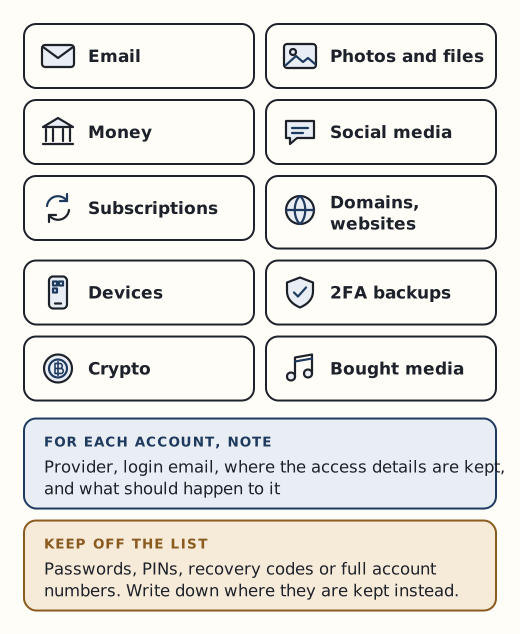
Going category by category stops you missing things. For each entry, note the provider, the username or email address it uses, and what you want done.
Email is where password resets arrive, so list every address, including old ones still in use for logins. Note which provider runs each one. Outlook.com and Yahoo Mail can delete email after about a year without a sign-in.
Photos, files and cloud storage
iCloud, Google Photos, Google Drive, OneDrive, Dropbox. Mark which folders matter most. Note whether you have set up an Apple Legacy Contact or Google Inactive Account Manager.
Money
PayPal, online banks such as Revolut, Monzo, Starling and Wise, and any investment apps. Write the provider’s name only, not account numbers. Your executor can confirm the details with each provider.
Social media
Facebook, Instagram, LinkedIn, X, TikTok and others. Say whether you want each one memorialised or deleted. Facebook lets you name a legacy contact or choose deletion in advance.
Subscriptions and recurring payments
Streaming, software, cloud storage plans, memberships. Note which card or account pays for each. An active Google subscription, for example, stops Google deleting the account for inactivity, so it may keep charging the card.
Domains and websites
Domain names, the registrar that holds each one, the hosting company and the renewal dates. Nominet cancels a .uk domain held by an individual if the person dealing with the estate does not transfer it within a year of the death.
Devices
Phones, computers, tablets, external drives. Note whether encryption is on (BitLocker on Windows, FileVault on Mac) and where the recovery key is kept.
Two-factor authentication
Which authenticator app you use, where the backup codes are, and whether you have security keys. See 2FA and inheritance.
Crypto
List that you hold it and where the instructions are. For the detail, see our sister site on crypto inheritance.
Licensed purchases
Kindle books, iTunes and Google Play purchases are typically licences and cannot be passed on. List them only if you want your family to know they exist.
Example layout
| Account | Provider | Login email | What to do | Access via |
|---|---|---|---|---|
| Family photos | Google Photos | main Gmail | Download, then close | Inactive Account Manager |
| Main email | Gmail | main Gmail | Keep open until accounts are sorted | Password manager |
| Spending money | Monzo | main Gmail | Close, pay to estate | Executor contacts Monzo |
| Profile | old Hotmail | Memorialise | Legacy contact named |
Where to keep it
Cancer Research UK’s guidance says to keep the inventory current, accessible to your executors, stored securely and backed up. A printed copy filed with your will or letter of instruction, plus a copy your executor already holds, works for most people.
Avoid putting it only in a bank safe deposit box. In England and Wales, executors usually need the grant of probate before a bank will open one.
Our free digital asset inventory template is a printable version of the table above, with a section for each category.
Keep it current
Accounts come and go. Review the list once a year, and whenever you open a new bank or payment app, change phone or move email provider. Then make sure your letter of instruction still matches it.