
- Official guidance gives a rough order only: register the death, tell government, then deal with banks and everyone else.
- Save photos, files and messages before you close anything. Some closures wipe data for good.
- In the UK, your bank or card issuer can stop recurring payments without you chasing every company.
- Keep the email account and phone number going until the rest is done. Password resets and security codes go there.
No official checklist tells you which account to close first. GOV.UK sets out the order for government matters (register, Tell Us Once, funeral, estate, probate) and then simply says to tell banks and utility companies. Citizens Advice adds banks, utilities, insurers and subscriptions after the government steps.
The order below fills the gaps with practical sense. Adapt it to your situation.
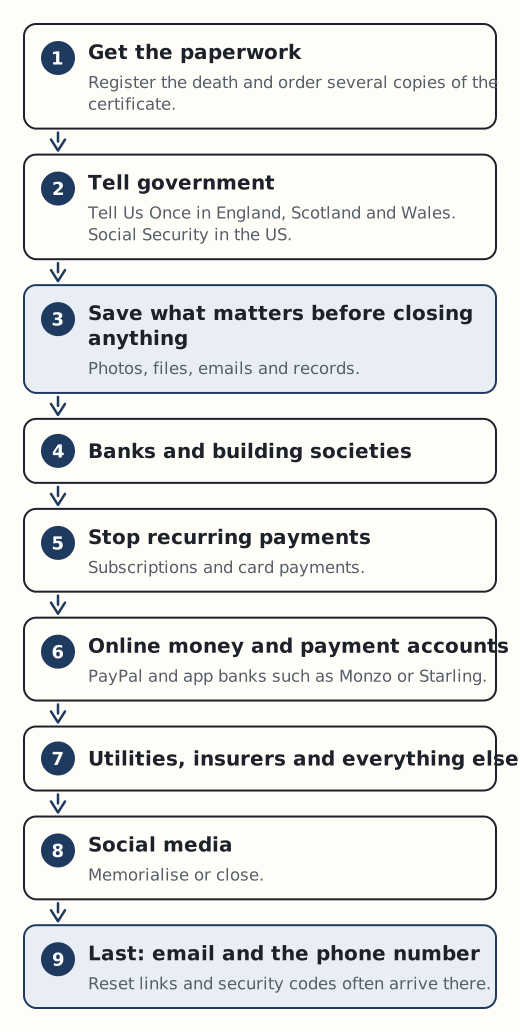
1. Get the paperwork
Register the death and order several copies of the death certificate. Our page on the documents you need covers deadlines and costs in the UK, the US and the EU.
2. Tell government
In England, Scotland and Wales, Tell Us Once notifies HMRC, DWP, the Passport Office, DVLA and councils in one go. If the person was on benefits, Citizens Advice also points to the DWP Bereavement Service on 0800 151 2012. In the US, funeral homes generally tell Social Security. If yours did not, call 1-800-772-1213.
3. Save what matters before closing anything
Some closures are final, so do this early:
- Google: if you ask Google to close the account, it cannot hand over the contents later. Ask for data first.
- O2 warns that once a SIM is closed, contacts, texts and voicemails on it are lost.
- Microsoft: Outlook.com and OneDrive accounts freeze after a year without a sign-in, and the files are deleted shortly after.
Download photos and documents you can reach, and note what you can’t. Our guide to photos and cloud storage explains each company’s process.
4. Banks and building societies
The free Death Notification Service tells several banks at once, including Barclays, HSBC, Lloyds, Nationwide, NatWest and Santander. Members reply within 10 working days if they hold an account. Revolut, Monzo, Starling, Wise, PayPal, Metro Bank, TSB and Virgin Money are not members at the time of writing (October 2026), so contact them directly.
Citizens Advice suggests asking banks to freeze accounts and to close them from the date of death. In the US, tell the credit bureaus (Experian, Equifax and TransUnion) so the file is flagged as deceased. Experian accepts this only from the spouse or someone with legal authority, such as the executor. Equifax and TransUnion say they pass the notice on to the other two.
5. Stop recurring payments
In the UK, the FCA says your card issuer must stop recurring card payments once asked, without you contacting the business first. Direct Debits can be cancelled through the bank at any time. Notifying the bank of the death often does this anyway: Starling, for example, stops all payments out, including Direct Debits, once the account is frozen.
In the US, the CFPB says to tell both the company and the bank in writing that permission has been withdrawn. Cancelling a payment does not cancel what is owed.
Our subscriptions guide covers app stores and streaming services.
6. Online money and payment accounts
PayPal, Revolut, Monzo, Starling and Wise each have their own bereavement process and their own limit for when they need probate. See PayPal and online banks.
7. Utilities, insurers and everything else
Energy, broadband, insurance, memberships and shopping accounts. For junk mail, Citizens Advice suggests the free Mailing Preference Service and The Bereavement Register. The Deceased Preference Service shares registrations with credit agencies to help prevent identity fraud.
8. Social media
Decide between memorialising and deleting. Unless an account carries a paid subscription, this can usually wait until the money matters are settled. Each platform has its own route.
9. Last: email and the phone number
Keep the main email account and mobile number running until the steps above are done. This is practical advice, not official guidance, but the reasons are concrete. Password resets, security codes and bank letters often arrive there. If a UK mobile number is closed, Ofcom has said operators can recycle it to someone else after anywhere from 3 months to a year, so text codes could reach a stranger.
Ofcom says UK operators must have policies to treat bereaved customers fairly. They may transfer the account into your name, and you can ask to keep the number. Ofcom says you shouldn’t have to pay an early termination charge. Read more in accessing a deceased person’s phone.
Keeping an account running does not mean signing in as the person who died. Providers don’t authorise that, and using someone else’s password can breach their terms and, in some cases, computer-misuse law. Keep the bill paid and use the provider’s bereavement route.